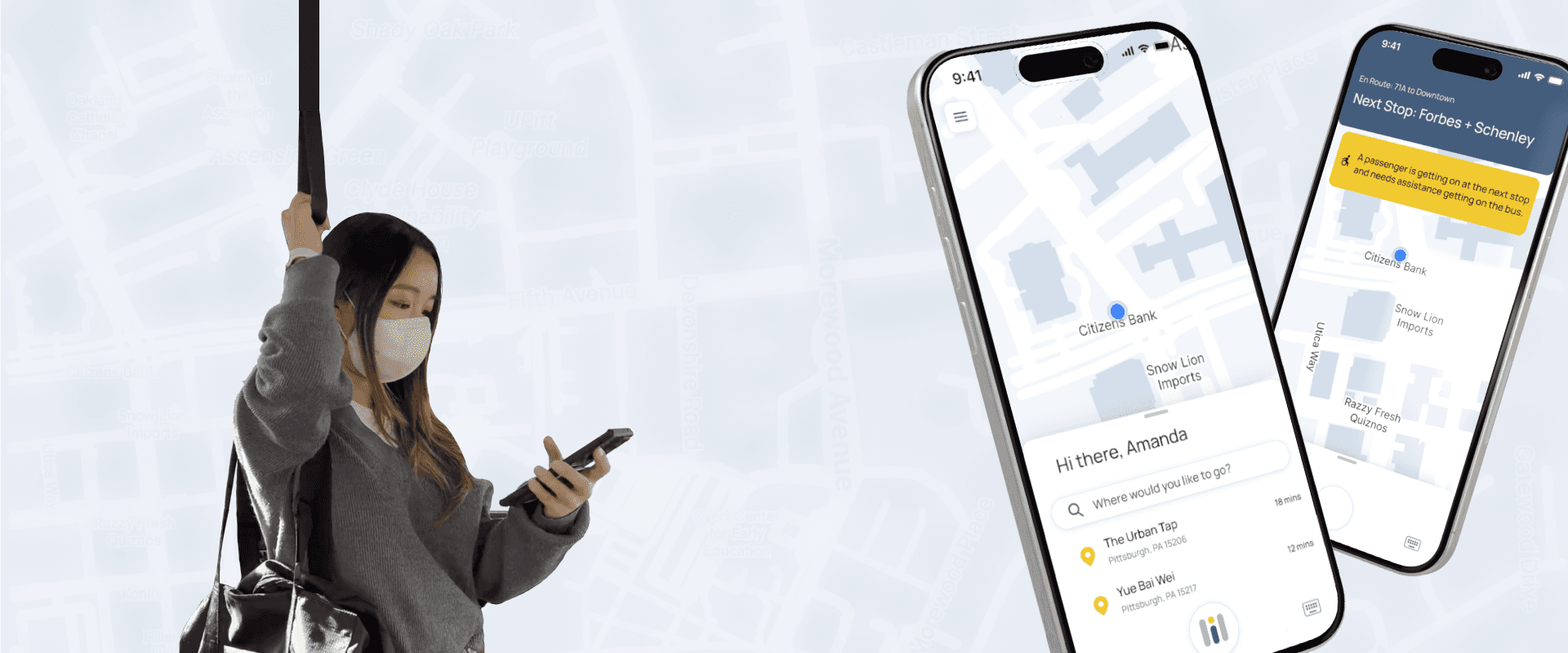
Ollie
Smart Voice Assistant for Pittsburgh Regional Transit
OVERVIEW
Ollie is a conceptual conversational AI system designed to enhance the travel experience by keeping passengers informed, ensuring their safety, and providing accessible assistance. The goal was to create an AI-driven interaction model that supports a diverse range of passenger needs, including those with disabilities, by delivering clear, timely, and intuitive conversational experiences.
MY ROLE
I led the end-to-end UX design for this project, from user research and scenario definition to conversational flow design and interface prototyping. My focus was on translating research insights into clear interaction principles and ensuring the experience balanced accessibility, clarity, and situational awareness across different travel contexts.
MY ROLE
SKILLS
TEAM
TIMELINE
OVERVIEW
Designing for Uncertainty in Transit
Existing transit tools focus on static information, but often fall short when passengers need guidance most. This project explores how a conversational, context-aware assistant could provide situational support during moments of uncertainty—helping riders understand what’s happening and what to do next without having to piece information together on their own.
CHALLENGES
LOST IN TRANSIT
The system was built for small networks, not citywide scale. As a result, critical information is scattered across disjointed channels, forcing passengers to hunt, backtrack, and piece together updates that should be visible at a glance.
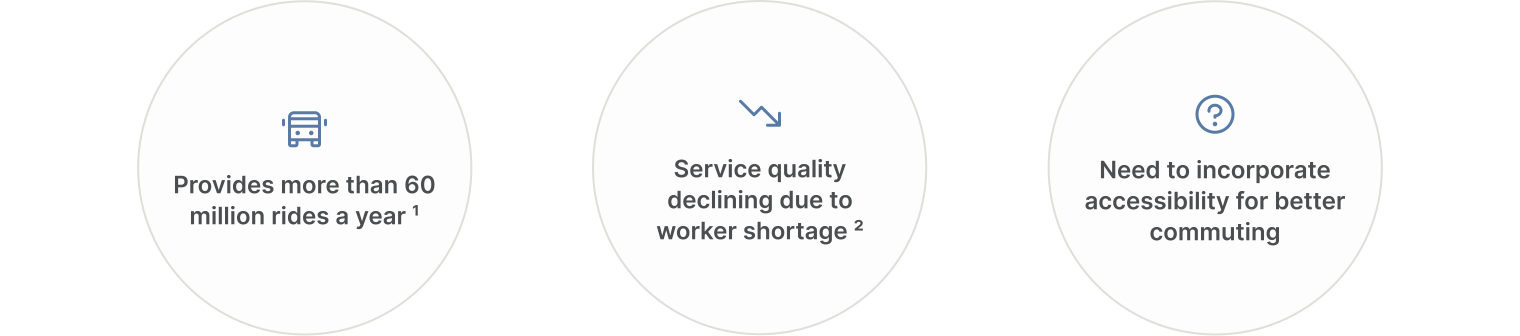
¹ About Us, https://www.rideprt.org/inside-Pittsburgh-Regional-Transit/about-us/
² Deto, Ryan. “Pittsburgh Regional Transit Says Worker Shortages, Other Issues Contributing to Service Cuts.” TribLIVE.com, 29 Oct. 2022
RESEARCH
DEFINING THE PROBLEM SPACE
To build an effective conversational AI for transit, I needed to understand both the emotional and practical challenges passengers face. My research approach combined two methods to capture a complete picture of user needs: Existing System Audit and User Interviews.
KEY FINDINGS
By analyzing the current experience through existing system audit and support ticket review, I identified three critical pain points affecting administrator efficiency:
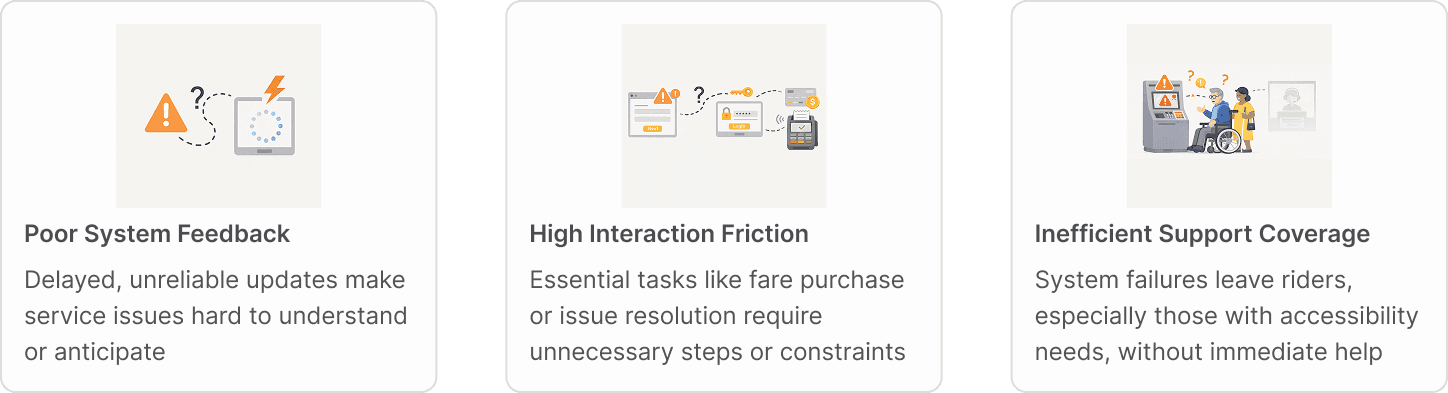
These findings showed that while existing systems are effective at delivering information, they often fail to account for the emotional and situational context of passengers navigating stressful travel scenarios. Passengers need a unified, adaptive interface that responds to their context and provides reassurance in real time—revealing a clear opportunity to rethink transit assistance as a more conversational and empathetic experience. This led to the guiding question:
How might we design a conversational AI system that streamlines real-time support and improves passenger confidence without adding cognitive burden during travel?
THE APPROACH
TURNING STRESS INTO SUPPORT
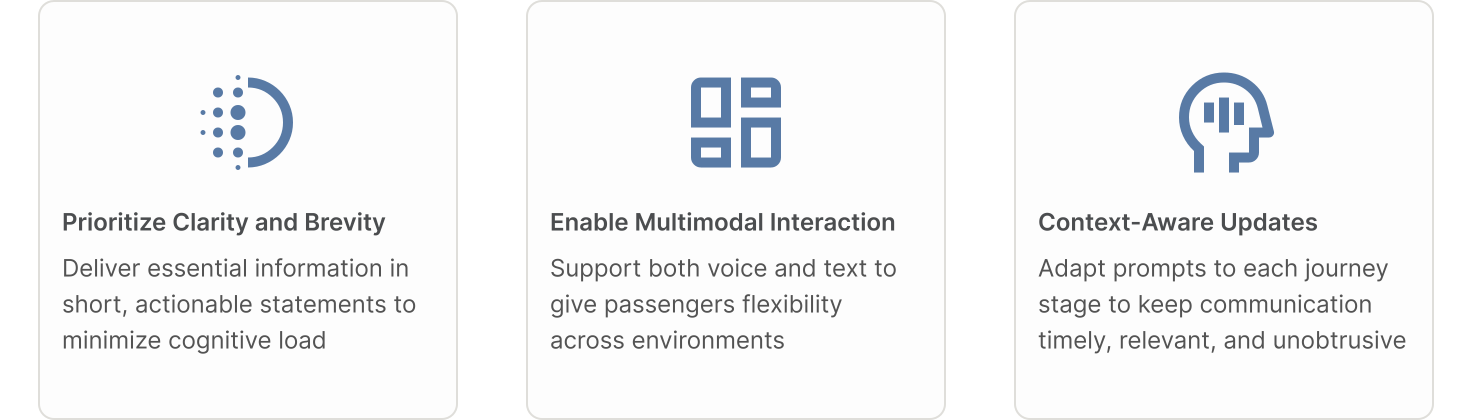
With a clear understanding of passenger pain points, I developed a design strategy for an intelligent, stress-aware communication system. Research showed that passengers need adaptive, human-like support during stressful travel moments, which led to conversational AI as the solution approach. To support passengers during stressful travel moments, I defined three guiding design principles that shaped how the assistant communicates:
TARGET USER GROUPS
To validate the assistant across different transit roles and travel contexts, I focused on three representative user groups with distinct needs and interaction constraints.
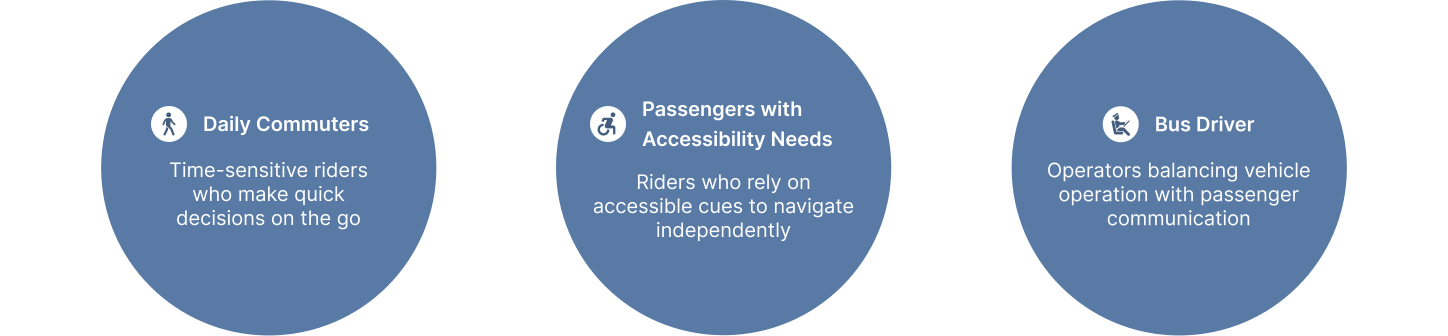
Considering the different passenger needs and travel contexts, I defined design principles that guided how support is structured and communicated. These principles were tested through early concept walkthroughs and scenario-based feedback sessions, which helped refine how support adapts to the distinct constraints of each user group.
SOLUTION
Making Insight into Action
Building on the research findings and guiding design principles, I translated insights into a conversational support experience that adapts to different travel contexts. Rather than presenting static information, the solution focuses on delivering timely, context-aware assistance that helps passengers navigate stressful moments with clarity and confidence. This approach resulted in a set of core interaction patterns that define how passengers engage with support throughout their journey:
OVERVIEW OF MOBILE DESIGN
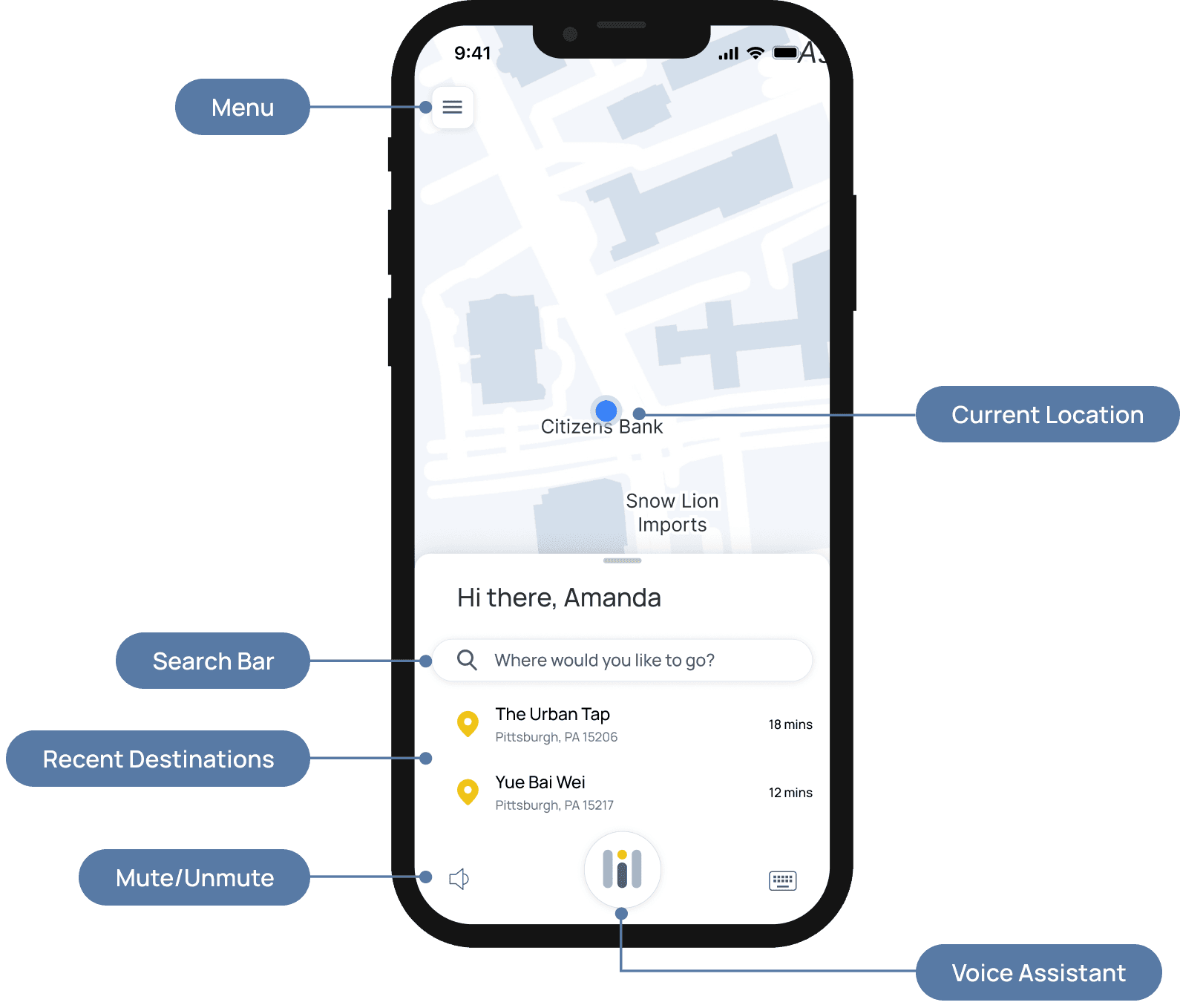
CONVERSATIONAL TRANSIT SUPPORT
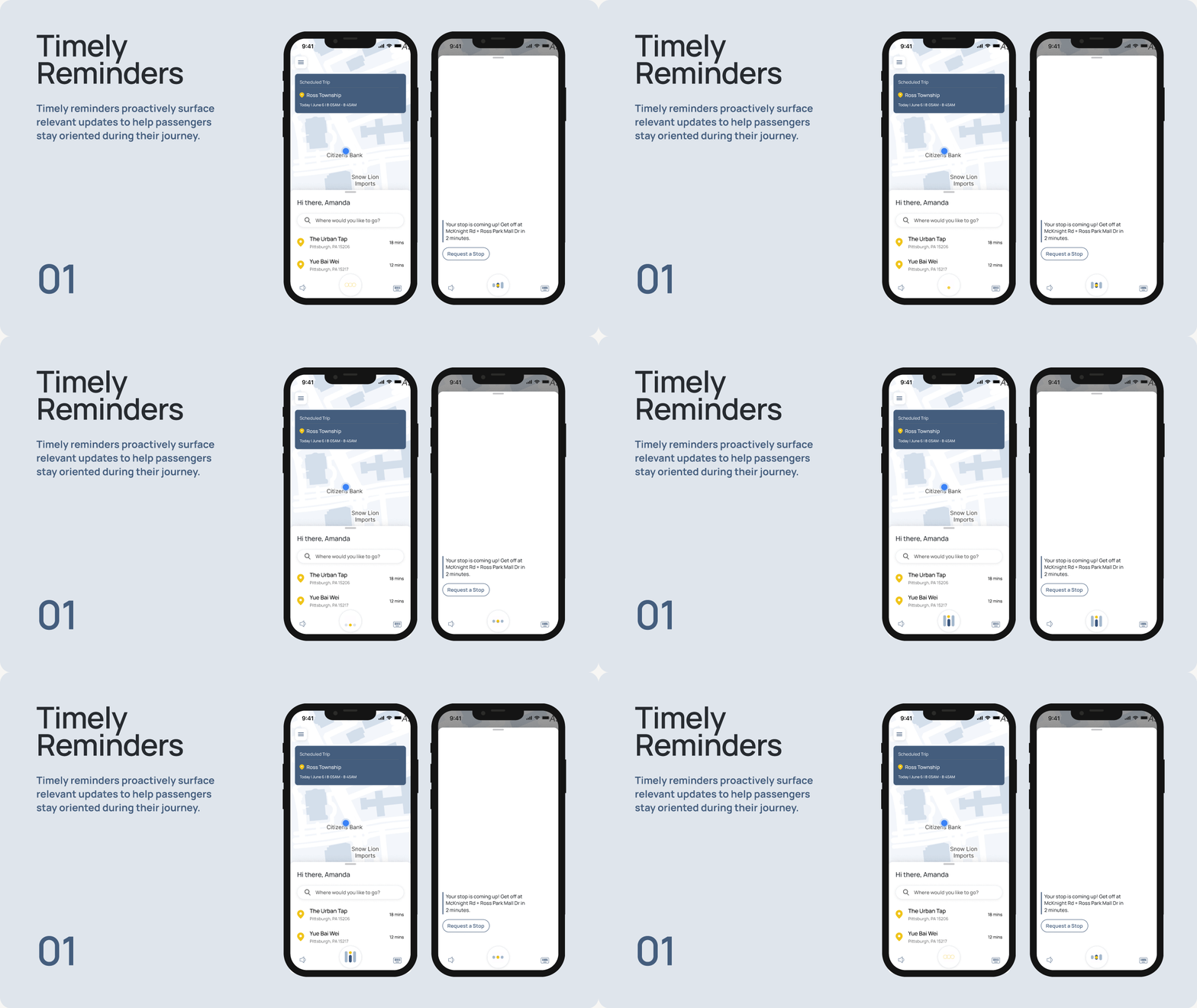
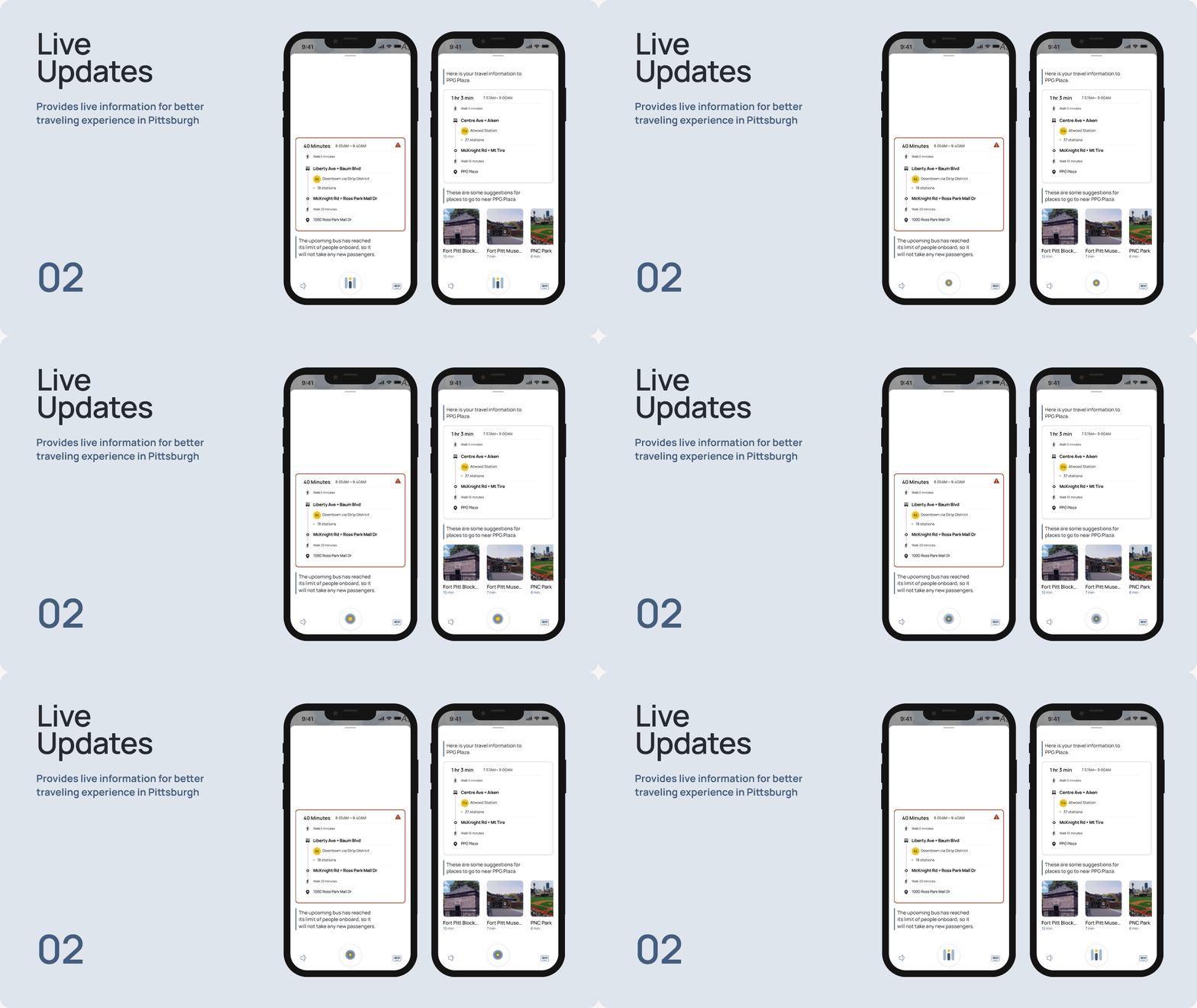
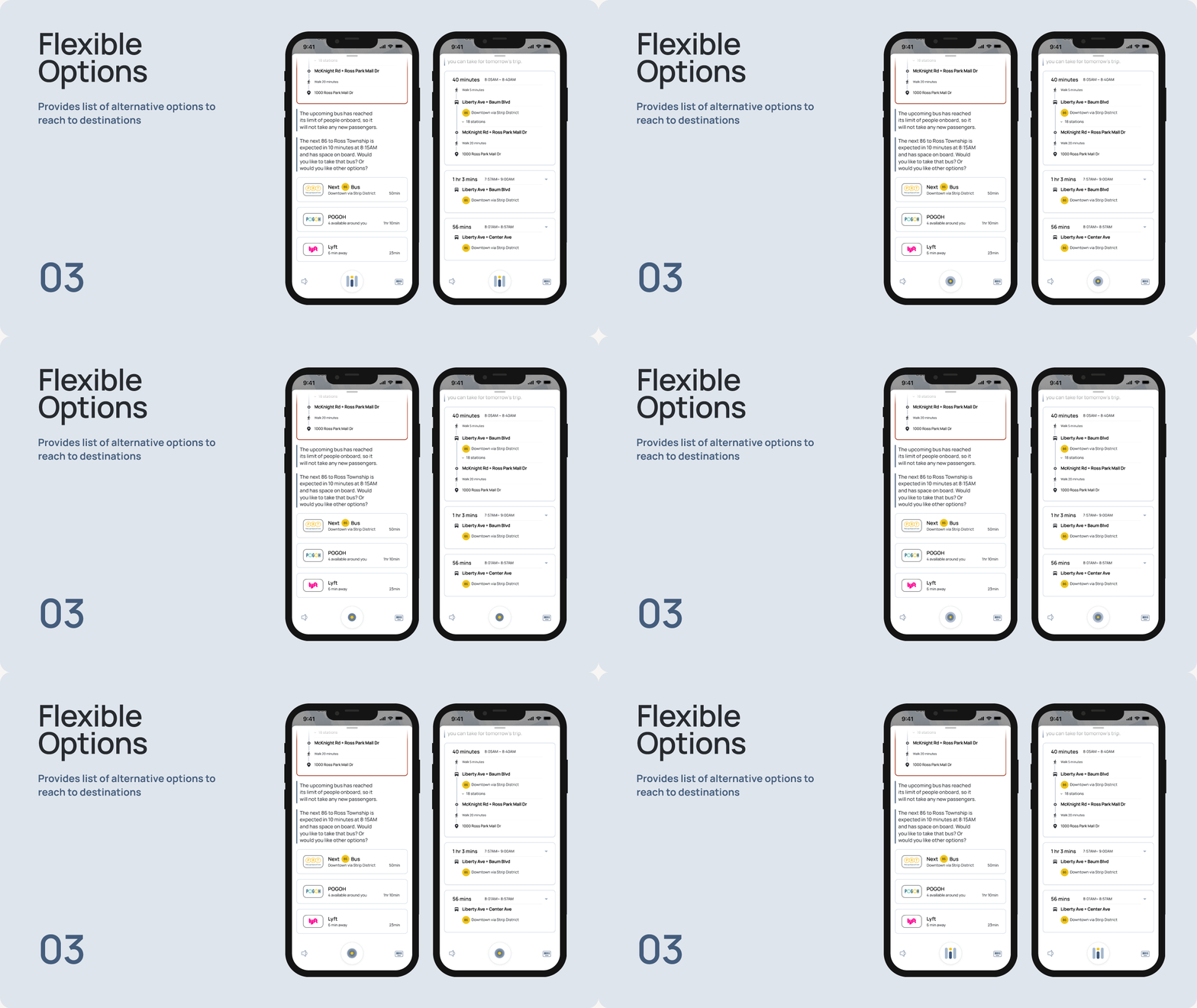
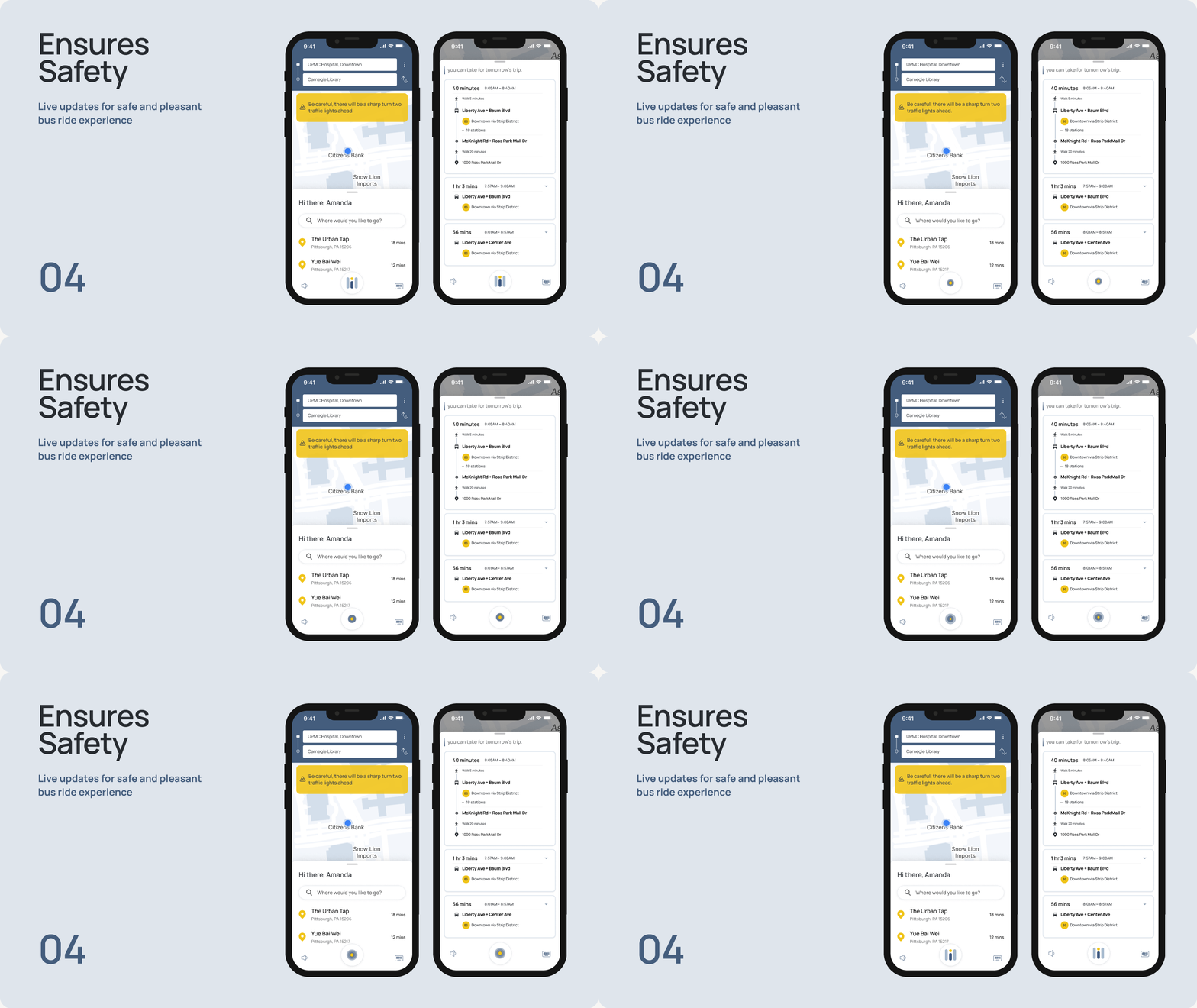
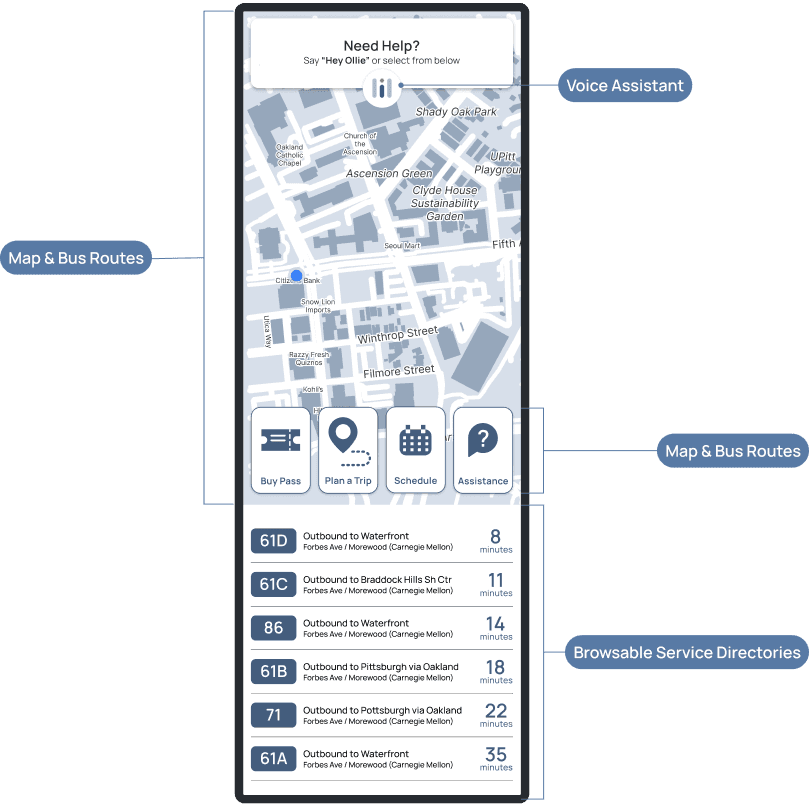
Mobile devices are the primary way to use Ollie. The mobile experience combines map-based navigation with conversational interaction to help passengers get assistance without losing focus. Passengers can ask questions, receive updates, and understand next steps through voice or text—allowing support to adapt to different travel contexts and levels of urgency.
OVERVIEW OF KIOSK DESIGN
ON-SITE TRANSIT ASSISTANCE
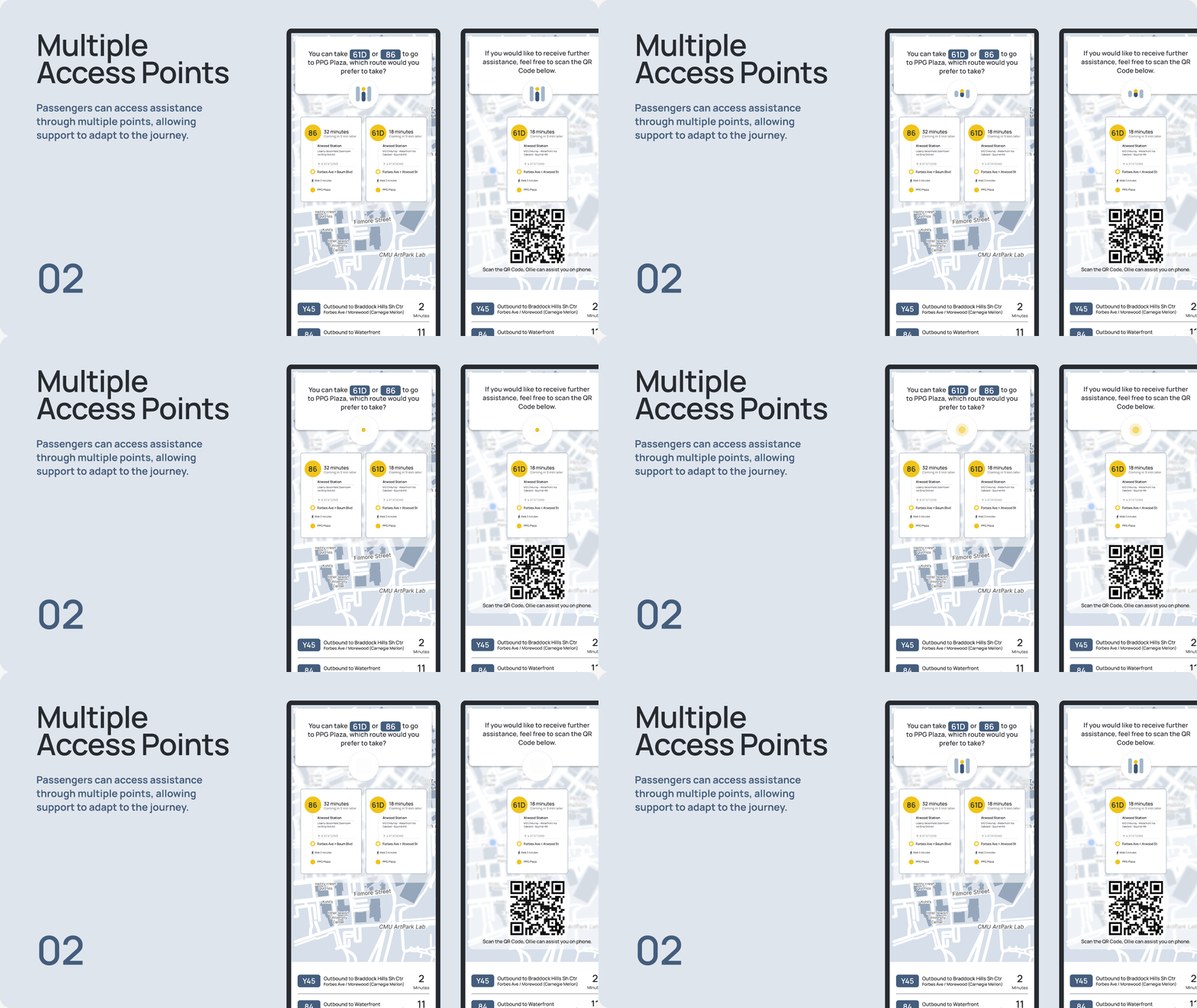
The kiosk provides on-site access for users without mobile devices. Designed for shared, public use, it prioritizes clarity and speed to minimize cognitive load, ensuring Ollie remains accessible across different physical contexts.


Validation & Reflection
Validating Ollie Through Real-World Scenarios
As a final stage of the project, I conducted scenario-based usability testing to evaluate whether Ollie meaningfully reduced uncertainty during transit.
KEY USER INSIGHTS
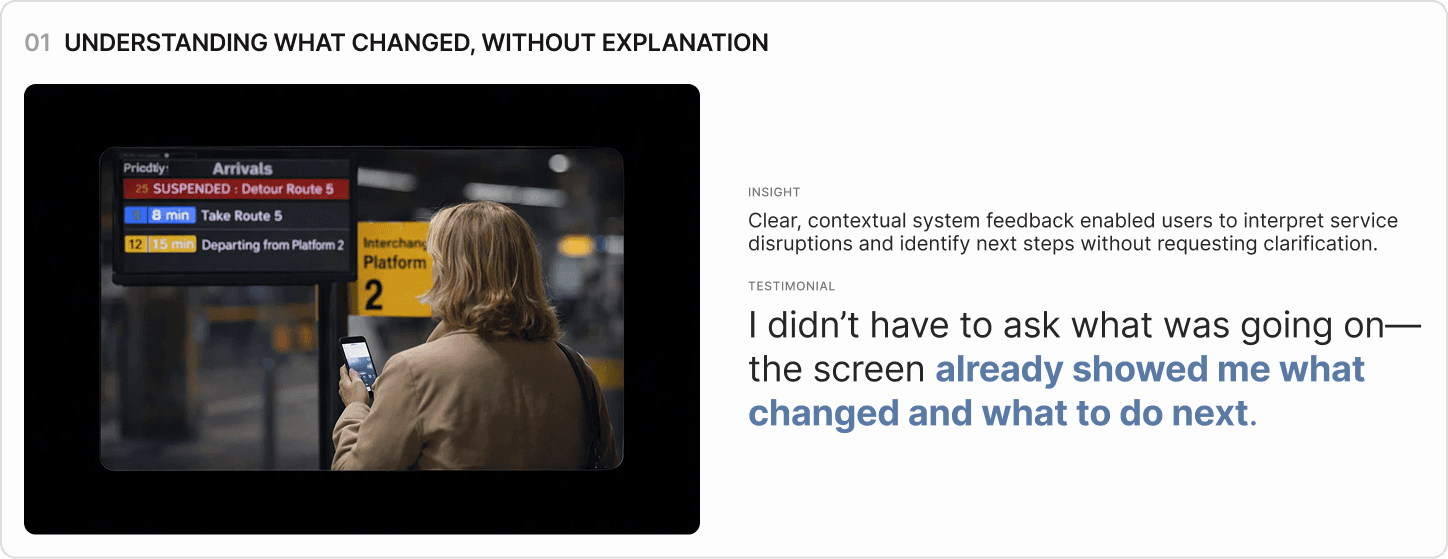
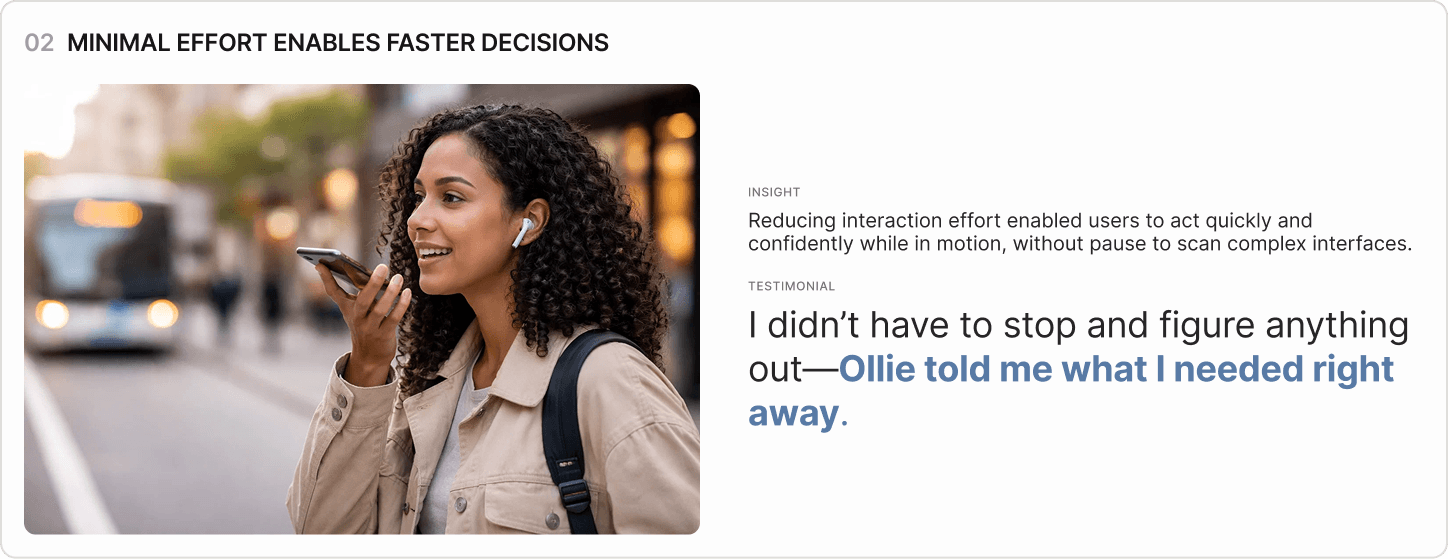
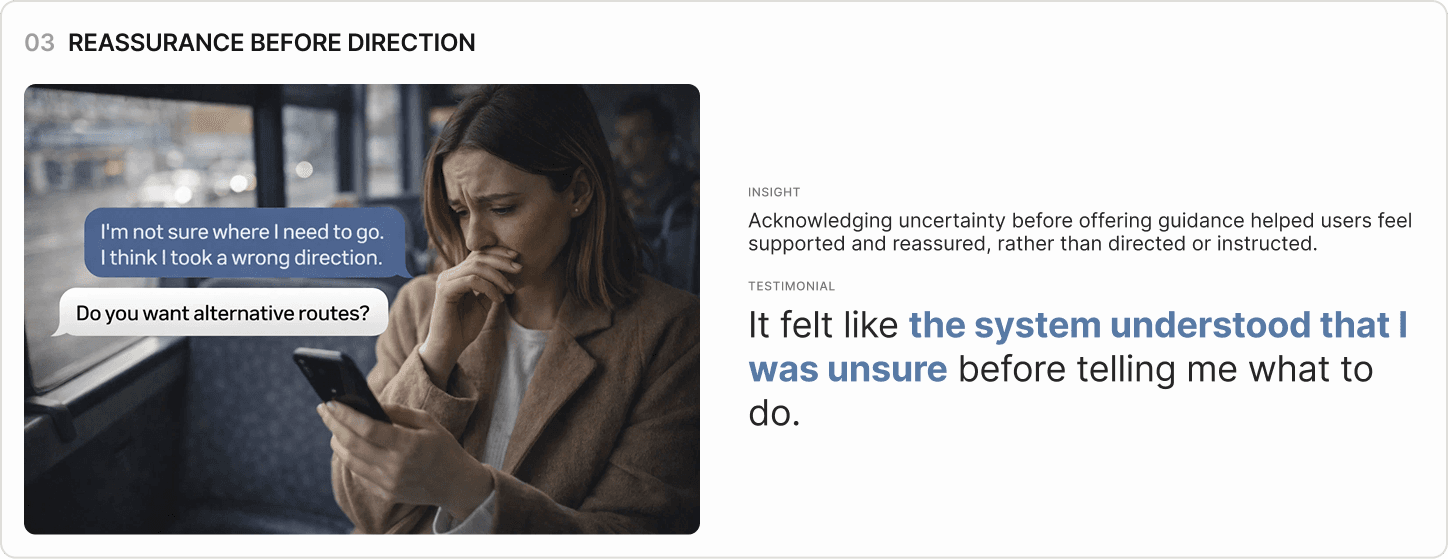
Scenario-based testing revealed consistent patterns in how participants interpreted system feedback, navigated disruptions, and sought reassurance while in transit. Rather than relying on static information or step-by-step instructions, users gravitated toward experiences that helped them quickly understand what changed, required minimal interaction while moving, and acknowledged uncertainty before offering guidance. These patterns informed how clarity, effort, and emotional support were prioritized in Ollie’s interaction design.
REFLECTION
Working on Ollie changed how I think about designing AI assistance in real-world, high-stress contexts. Beyond system capability, this project highlighted how clarity, timing, and tone shape user confidence when decisions need to happen quickly. From concept framing through scenario-based testing, I learned that reducing interaction effort and acknowledging uncertainty before offering direction are critical to building trust. Designing Ollie reinforced that human-centered AI is less about perfect answers and more about thoughtful presence in the moment.
*.·:·.✧ ✦ ✧.·:·.*